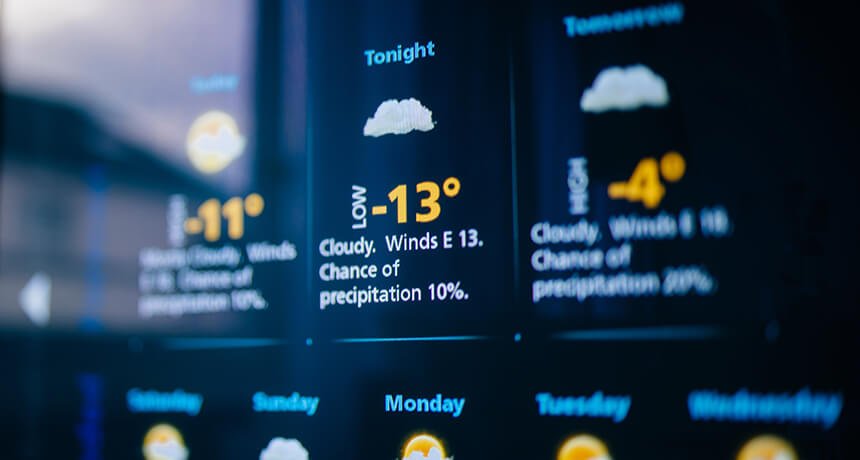

Machine learning augments physics-based weather models by learning from large, heterogeneous datasets. It enhances nowcasting, short- to medium-range forecasts, and uncertainty quantification. Data streams from satellites, radar, in-situ sensors, and reanalyses inform calibrated outputs and transparent evaluation. Constraints grounded in physical laws preserve plausibility, while governance and monitoring ensure reliability and rollback capability. The result is decision-ready forecasts for risk assessment and operational planning, inviting closer scrutiny of where the approach succeeds and where it falters.
What ML Brings to Weather Forecasting
Machine learning offers a complementary set of tools to traditional numerical weather prediction by leveraging large, heterogeneous datasets to identify patterns that may be underrepresented or unresolved in physics-based models.
The approach emphasizes neural integration, blending data-driven insights with physical constraints.
It enables uncertainty quantification, improves calibration, and informs model ensembles, supporting transparent, interdisciplinary assessment of forecast reliability and decision-relevant risk.
How Data Fuels Accurate Predictions
Data powering accurate predictions arises from integrating diverse, high-quality sources—from satellite radiances and radar observations to in-situ measurements and reanalysis products.
The process leverages robust data pipelines to harmonize formats, quality-control checks, and timely ingestion.
Model calibration aligns simulations with observations, reducing biases and enhancing reliability.
Interdisciplinary collaboration ensures transparent methodologies and rigorous evaluation for adaptive forecasting systems.
Real-World Forecasting Improvements and Examples
Recent real-world deployments of machine learning in weather forecasting demonstrate tangible gains in forecast skill, uncertainty quantification, and decision-support timeliness across domains such as severe weather, nowcasting, and medium-range prediction.
In practice, data assimilation and ensemble methods enable calibrated probability forecasts, sharper field estimates, and robust risk assessment, illustrating interdisciplinary progress while highlighting scalable, transparent improvements for operational decision makers.
See also: How Blockchain Projects Protect Against Cyberattacks
Practical Considerations and Future Directions
Practical considerations for integrating machine learning into weather forecasting center on balancing methodological rigor with operational feasibility, ensuring that gains in forecast skill translate into reliable, interpretable, and decision-ready products.
Data governance frameworks stabilize data quality, provenance, and ethics, while model deployment pipelines emphasize robustness, monitoring, and rapid rollback capabilities to sustain trust, reproducibility, and scalable, interdisciplinary collaboration.
Frequently Asked Questions
How Do ML Models Handle Extreme Weather Events?
Extreme event prediction remains challenging due to sparse data and nonlinear dynamics, with models often trading accuracy for robustness; interpretability challenges persist as ensembles and physics-guided approaches advance, enabling interdisciplinary assessments while preserving scientific rigor and freedom of inquiry.
What Are Common Biases in ML Weather Forecasts?
Common biases in ml weather forecasts include biases in predictions due to training data limitations and model misspecification, with data biases shaping outcomes; the assessment remains rigorous, data-driven, interdisciplinary, and transparent for an audience seeking freedom.
Can ML Replace Numerical Weather Prediction Fully?
ML cannot fully replace numerical weather prediction; it supplements with ML deployment strategies, emphasizing model interpretability, uncertainty quantification, and robust handling of extreme events, while safeguarding data privacy within an interdisciplinary, data-driven framework guiding cautious decision freedom.
How Is Uncertainty Quantified in ML Forecasts?
Uncertainty in ml forecasts is quantified through uncertainty calibration and probabilistic forecasting, where predictive distributions are evaluated against observations; calibration checks and proper scoring rules reveal reliability, sharpness, and skill, supporting interdisciplinary rigor while preserving methodological freedom.
What Are Data Privacy Considerations in Weather ML?
Data privacy considerations in weather ML include safeguarding weather datasets, minimizing exposure of sensitive metadata, and evaluating model interpretability; policy implications mandate transparent data governance, consent, and accountability across interdisciplinary teams for responsible, freedom-respecting scientific inquiry.
Conclusion
Machine learning complements physics-based models, leveraging diverse data streams to refine forecasts, quantify uncertainty, and enhance ensemble interpretation. Data fusion from satellites, radar, and in-situ measurements improves nowcasting and mid-range predictions while preserving physically plausible results through constraint-aware modeling. Empirical gains are demonstrated in rapid hazard detection and probabilistic risk assessment. Some critics question interpretability; however, transparent governance, robust validation, and rollback mechanisms ensure reliability, enabling decision-ready forecasts that support operational planning under rapidly evolving weather scenarios.


 By